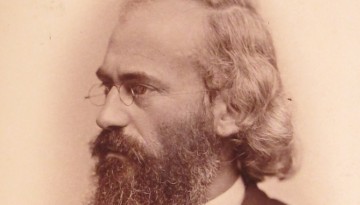
The life and work of James Edward Oliver, a passionate supporter of women’s suffrage and a nationally recognized mathematician, will be celebrated in an evening of talks on Oct. 14.
The rocky surface of Earth’s geology may provide a buffer for climate change to absorb excess carbon, according to a new Cornell paper in Global Biogeochemical Cycles.
Elizabeth Ogonek, assistant professor in the Department of Music, is one of three composers whose work was commissioned and performed by pianist Xak Bjerken for “The Oberlin Concertos.”
The Center for Teaching Innovation's Digital storytelling community of practice offers monthly sessions this fall for instructors to explore this inclusive teaching strategy and discuss their ideas with peers.
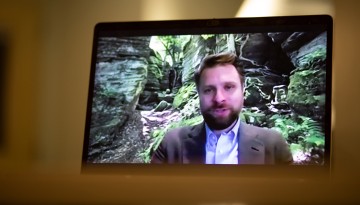
Jonathan Weston ’04, manager of Panama Rocks, a park and geologic site in New York’s Chautauqua County, received the Cornell New York State Hometown Alumni Award Oct. 6 in a virtual ceremony.
A Cornell-led international team of researchers has received a $65,000 grant from the National Endowment for the Humanities for its project, “The Next Monsoon: Climate Change and Contemporary Cultural Production in South Asia.”
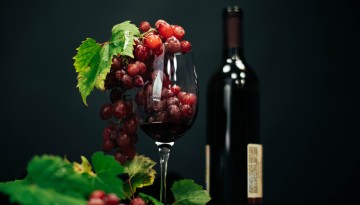
Cornell food scientists now show that the leftover pulp from the red wine making process has the potential to be a nutritive, illness-reducing treasure.
A small contribution from Tristan Lambert, professor of chemistry and chemical biology, when he was a doctoral student helped catalyze the breakthrough in catalysis that led to the 2021 Nobel Prize in chemistry.
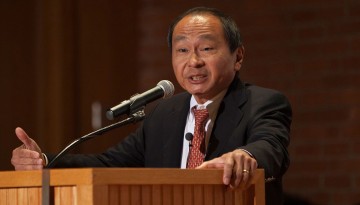
The Center for the Study of Economy & Society presents a new fall lecture series, “The American State in a Multipolar World,” beginning on Monday, Oct. 18th with an in-person lecture by Francis Fukuyama '74.