The Spaceflight Mechanics Cornell Certificate Program will be available through eCornell and offers insight into a variety of topics from measuring space and time to planning orbital maneuvers and interplanetary trajectories.
Biogeochemistry – an interdisciplinary field that examines the elemental cycles through Earth’s air, land and water – is critical to understanding climate change. Learn how it found its origin at Cornell CALS more than six decades ago.
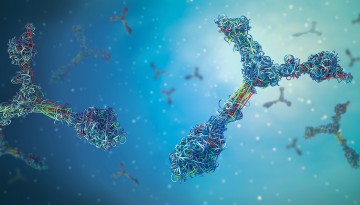
A new study published Sept. 7 in the journal of the International Union of Crystallography demonstrates that cryo-EM samples can be prepared with a safer and less expensive coolant – liquid nitrogen – and these samples can produce even sharper images than those prepared with ethane.
The collaboration will support cross-institutional scientific partnerships between students and faculty at Cornell and N.C. A&T, a historically Black university that produces more African American engineers than any other university in the United States.
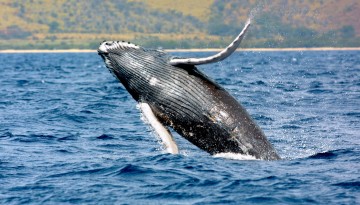
“The Whale Listening Project,” which runs Sept. 23-26, is a four-day immersion in the beauty of whale song and a celebration of the 50th anniversary of the best-selling 1970 album, “Songs of the Humpback Whale,” co-produced by Roger Payne, Ph.D. ’61, and Katy Payne ’59.
A collaboration of researchers led by Cornell has been awarded $22.5 million from the National Science Foundation to continue gaining the fundamental understanding needed to transform the brightness of electron beams available to science, medicine and industry.
Natalie Wolchover, an award-winning science writer with Quanta Magazine, has been named the Zubrow Distinguished Visiting Journalist Fellow in the College of Arts and Sciences for spring 2022.
As the U.S. withdrawal from Afghanistan unfolded, two events kept pace brought Afghan and congressional national security experts to the campus conversation.