A country’s values, norms and policies influence fertility rates, particularly among the religious, according to a new study by sociologist Landon Schnabel.
In her new book, “The Queer Nuyorican: Racialized Sexualities and Aesthetics in Loisaida,” assistant professor Karen Jaime ’97 highlights the important contributions made by queer and transgender artists of color at the famed Nuyorican Poets Cafe.
The highly educated accumulate systematically advantaged portfolios of resources in long-term relationships, making families more unequal, according to Cornell sociologists.
Samantha N. Sheppard, associate professor of performing and media arts, has been named a 2021 Academy Film Scholar by the Academy of Motion Picture Arts and Sciences.
A new study describes how an interdisciplinary team of Cornell researchers used a state-of-the-art microscopy technique to reveal protein structures and key steps of a CRISPR-Cas system that holds promise for developing an improved gene editing tool.
Former Republican Hempstead Town Councilwoman Erin King Sweeney has joined the Institute of Politics and Global Affairs at Cornell University as senior associate director.
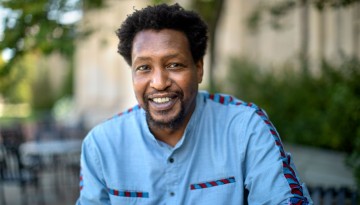
Mukoma Wa Ngugi, associate professor in the Department of Literatures in English, channeled his fascination with a traditional Ethiopian song called the Tizita into a new novel, “Unbury Our Dead With Song.”
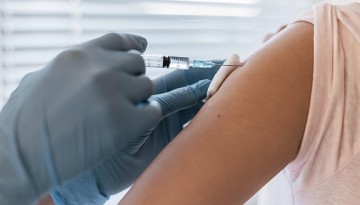
Personal protection against COVID-19 was the main reason given for vaccine acceptance among respondents in low- and middle-income countries, and concern about side effects was the most common reason for vaccine hesitancy.