Cornell’s seven-week Prefreshman Summer Program offers new students the opportunity to learn more about the university and its resources before they start their first year on East Hill.
Since 2015, the CHAMPS program has provided opportunities for high-caliber students from groups traditionally underrepresented in biomedical careers to engage in scholarship and research.
The National Science Foundation has awarded a nearly $2 million collaborative research grant to principal investigators from Cornell and other institutions to assess the effectiveness, across several metrics, of open educational resources.
Cornell researchers and their collaborators will continue to advance quantum science and technology thanks to $5.4 million in new funding from the U.S. Department of Energy to support two projects.
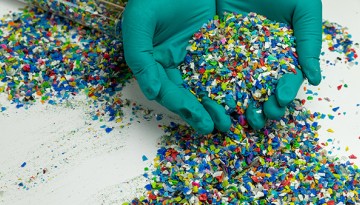
Cornell researchers created long chains of a polymer with high molecular weight and high tensile strength, resulting in a recyclable thermoplastic that is strong and flexible enough to be used for large-scale applications such as packaging products.
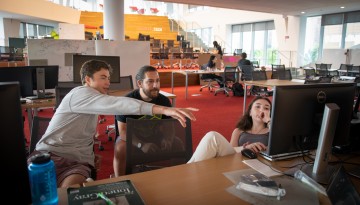
Sophomore students in the Milstein Program in Technology and Humanity spent their first summer in person at Cornell Tech, taking part in a series of mentored workshops, guest seminars, group projects, innovation challenges and other activities.
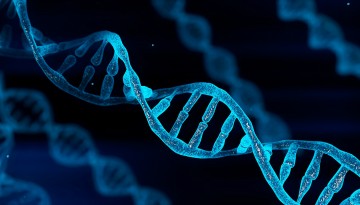
Cornell researchers have identified a new way to measure DNA torsional stiffness – how much resistance the helix offers when twisted – information that can potentially shed light on how cells work.