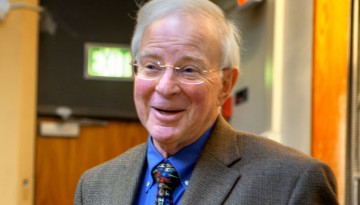
Richard “Dick” Polenberg, the Marie Underhill Noll Professor of History Emeritus who taught at Cornell for more than 45 years, died Nov. 26 in Ithaca. He was 83.
Cornell faculty have until Friday, Dec. 11, to submit nominations for the A.D. White Professors-at-Large Program, specifically in the areas of humanities, life sciences and physical sciences.
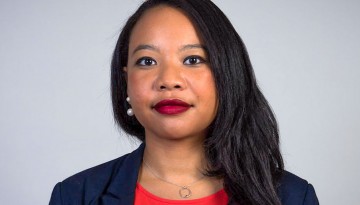
Tao Leigh Goffe, assistant professor in the College of Arts and Sciences, is one of the co-founders of the Journal of Indentureship and its Legacies, a new peer-reviewed publication set to debut in May 2021.
On Dec. 4, the final installment of the Democracy 20/20 webinar series will assess the state of American democracy in the wake of the contentious 2020 presidential election.
Chloe Ahmann co-edited “Breathing Late Industrialism,” a special issue of Engaging Science, Technology, and Society, to focus not just on the wreckage of post-industrial landscape but also on the “radical potential” of how “late industrial systems might be put to life-affirming work.”
Five Cornell faculty members have been elected fellows of the American Association for the Advancement of Science, the world’s largest general scientific society.
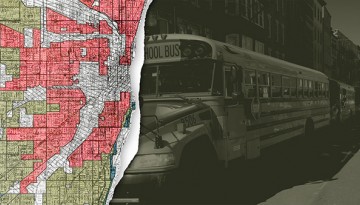
In the second “Racism in America” webinar, presented Nov. 19 by the College of Arts and Sciences, a panel of four Cornell faculty experts discussed discrepancies in education and housing.
The large Cornell-designed telescopic ‘ear’ at Arecibo, Puerto Rico, which listened for the enlightening crackle of the cosmos for nearly six decades, now hears silence.
In his new book, “The Early Martyr Narratives: Neither Authentic Accounts nor Forgeries,” humanities professor Éric Rebillard argues that martyr narratives are “fluid texts,” written anonymously, but not as literal historical documents.