Floods of unimaginable magnitude once washed through Mars’ Gale Crater equator around 4 billion years ago – a finding that hints at the possibility that life may have existed there.
In two related virtual events, the Humanities Scholars Program, together with the Africana Studies and Research Center, will examine the topic of abolitionism from a scholarly and community perspective.
Ella Maria Diaz, associate professor of Latina/o studies and English in the College of Arts and Sciences, examines the life and work of vanguard Chicano artist, poet, professor and activist José Montoya in her new book.
A Cornell administrator’s e-book includes anecdotes about biathlon training, how-to tips for new biathletes and a recounting of how he grappled with the death of a family friend.
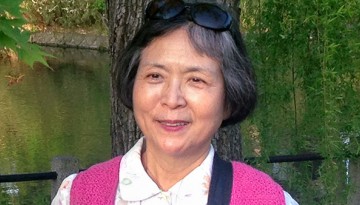
Anthropologist Yohko Tsuji views old age in America from a cross-cultural perspective, comparing aging in America and in her native Japan in her new book, “Through Japanese Eyes: Thirty Years of Studying Aging in America.”
Micky Falkson, a senior lecturer in the Department of Economics and one of its longest-serving faculty members, died at home in Ithaca Nov. 7. He was 83.
Chiara Galli, one of six members of the Klarman Postdoctoral Fellowships inaugural cohort, researches the U.S. asylum process, specifically the experiences of unaccompanied minors.
Cornell food scientists confirm that the grain teff helps the stomach and enhances the nutritional value of iron and zinc, according to a new modeling method.
A Cornell-led collaboration has developed a way to stack two-dimensional semiconductors and trap electrons in a repeating pattern that forms the long-hypothesized Wigner crystal.