New research from Hening Lin, professor of chemistry and chemical biology in the College of Arts and Sciences, finds that a protein called TiPARP acts as a tumor suppressor.
Matthew Velasco, assistant professor of anthropology in the College of Arts and Sciences, has been named a 2020 Career Enhancement Fellow by the Woodrow Wilson National Fellowship Foundation.
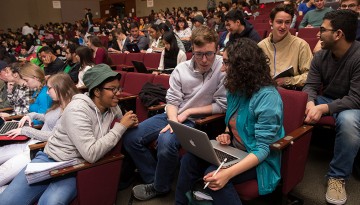
Men participated more in an active learning STEM course, while women reported lower perceptions of their scientific abilities and more likely to feel judged based on gender, a new Cornell-led study has found.
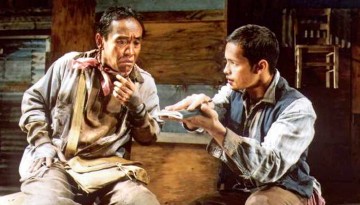
Virtual events at Cornell include a panel on COVID-19's medical and socio-economic impacts in Africa; a play and live Q&A marking the Southeast Asia Program's 70th anniversary; student art on display from New York City and beyond; and a live concert presented by Bound for Glory.
Cornell researchers combined genetic engineering, single-molecule tracking and protein quantitation to get a closer look at how living bacteria identify – and then build resistance to – toxic chemicals and metals. The knowledge could lead to the development of more effective antibacterial treatments.
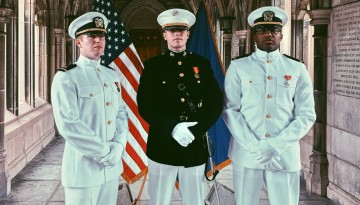
Culminating four years of rigorous military training, five Cornell seniors became officers in the U.S. Navy, and one in the U.S. Marine Corps, in virtual ceremonies May 22. Three more will take the oath May 29.
The Cornell Center for Social Sciences has awarded nearly $110,000 in rapid response grants to help faculty pursue nine research projects related to the COVID-19 pandemic.
Séamus Davis, the James Gilbert White Distinguished Professor Emeritus of physics, has received a $1.6 million five-year grant renewal from the Gordon and Betty Moore Foundation to continue his studies of quantum materials.
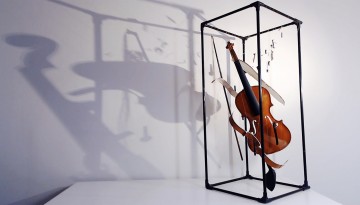
Students in the Bending Instruments course let their imaginations run free in creating unique musical instruments, using what they had on hand while sheltering at home.