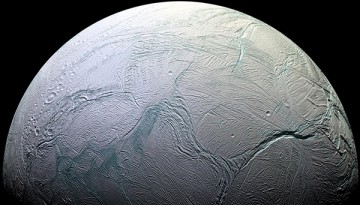
Scientists from the Southwest Research Institute, Johns Hopkins' Applied Physics Lab and Cornell confirm the presence of molecular hydrogen on a Saturn moon - a microbial food source and an ingredient needed for life.
Faculty will share ideas on climate change April 21-23 at the Smithsonian's Earth Optimism Summit, while students ascend Capitol Hill on April 21, and then walk in the national Science March on April 22.
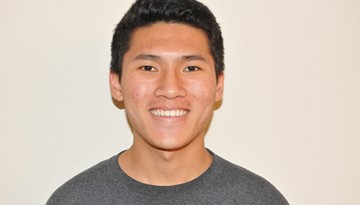
Allen Jiang '18, a chemical engineering major from Redmond, Washington, has won a 2017 Goldwater Scholarship, which recognizes top undergraduates in mathematics, the natural sciences and engineering.
Two dozen teams competed in Cornell's fourth annual high school programming contest, with a team from Ithaca solving the most problems in the least time to take the trophy.
Cornell faculty members Stephen Coate, María Cristina García, Suzanne Mettler and Fred Schneider have been elected to membership in the American Academy of Arts and Sciences.
Physicist Joshua Frieman will deliver this spring's Hans Bethe Lecture on the Dark Universe Wednesday, April 26, at 7:30 p.m. in Schwartz Auditorium, Rockefeller Hall.
Sixteen Cornell doctoral students will collaborate with community partners from Ithaca to India on research projects supported by 2017 Engaged Graduate Student Grants.
Ninety-eight Cornell graduate and professional students will travel to 47 countries over the next year with support from the Einaudi Center's International Travel Grant Program.
Artificial intelligence must be managed in ways that keep robots from doing harm accidentally, according to Daniel Weld, professor of computer science at the University of Washington.