In “Never On Time, But Always in Time,” Kate McCullough of the College of Arts and Sciences examines four books to explore how queer narratives focus on the body and its senses to find alternative ways of experiencing and presenting time.
Lecturer Corey Ryan Earle ’07, Cornell’s unofficial historian, gave the latest installment in the Last Lecture series, which invites a respected staff member or professor to give a lecture as if it were their final one.
Years before writing “The Good Earth” and winning the Nobel Prize in Literature, the aspiring novelist received encouragement and a master’s degree at Cornell.
A new method developed at Cornell provides tools and methodologies to compress hundreds of terabytes of genomic data to gigabytes, once again enabling researchers to store datasets in local computers.
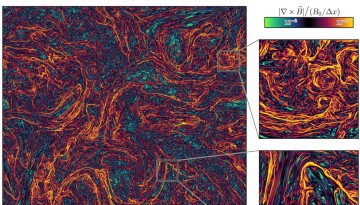
“We are going to run the largest simulations of the magnetized gas that pervades the space between stars, with the aim of understanding a crucial missing piece in our models for how stars and galaxies form."