Big Red Icon is a competition for student bands from across the university that is designed to help rebuild, uplift and connect musicians from all musical traditions. Winners will be given an opportunity to perform at Slope Day Events.
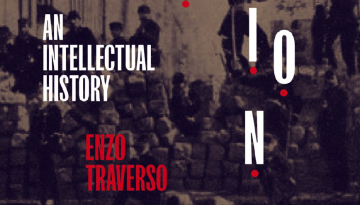
In “Revolution: An Intellectual History,” Enzo Traverso reinterprets the history of nineteenth and twentieth century revolutions through a constellation of images, from Marx’s ‘locomotives of history’ to Lenin’s mummified body to the Paris Commune’s demolition of the Vendome Column.
A new scholarship for first-generation undergraduate students has been established in the name of beloved government professor Isaac Kramnick, and will support students beginning this fall.
Sianne Ngai, Andrew W. Mellon Professor of English at the University of Chicago, will explore this question wrong ways of thinking in this Society for the Humanities event March 9.
An award-winning Argentine author, an agro-sustainability innovator, a renowned archaeologist and a leading sociolinguist are set to visit campus this spring as Andrew Dickson White Professors-at-Large.
A group of graduate students from Cornell is collaborating with students across the country to create a scholarly podcast focused on issues of diversity in archaeology.
Maya Phillips, a critic at large for The New York Times, has been named winner of the 2020-21 George Jean Nathan Award for Dramatic Criticism. The award committee comprises the heads of the English departments of Cornell, Princeton and Yale Universities.