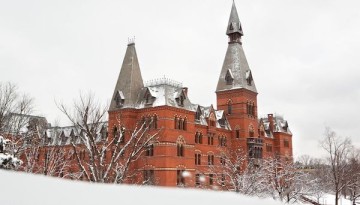
Two renowned biologists, May Berenbaum, Ph.D. ’80, and Ellen Rothenberg, have been appointed to six-year terms as Andrew Dickson White Professors-at-Large.
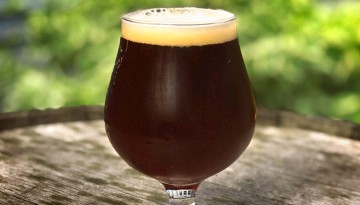
It’s got Finger Lakes hops, malt and cherries, plus Cornell maple syrup. Introducing ‘Gorges Libe-ation,’ a red ale developed by grad students and chock full of New York.
The faculty recipients of the 2021 Innovative Teaching and Learning Awards will use grants of up to $20,000 to explore new teaching technologies and strategies to enhance the student learning environment across campus.
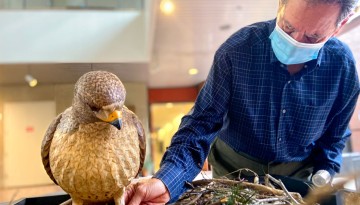
The life-size sculpture is the work of a Massachusetts man, a self-professed fan of Cornell’s red-tailed hawk family. The work took years to complete and is a remembrance of the hawk, Ezra, who passed away in 2017.
Registration is now open for Cornell's Winter Session 2022. You can choose from a wide range of online courses taught by Cornell faculty during the three-week period from Jan. 3-21. Enrollment is open to anyone interested in taking a class—from undergrads and high school students to alumni and any motivated adult.
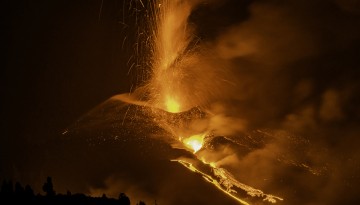
Associate professor Esteban Gazel and grad student Kyle Dayton will join a team of international researchers at the newly erupted Cumbre Vieja volcano in the Canary Islands.
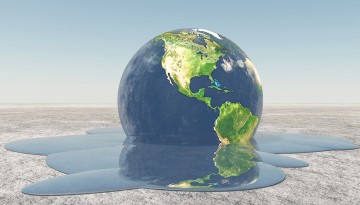
More than 99.9% of peer-reviewed scientific papers agree that climate change is mainly caused by humans, according to a new survey of 88,125 climate-related studies.
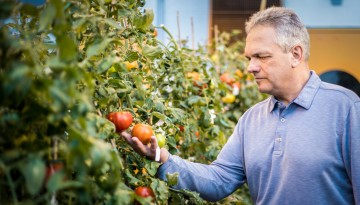
A team of researchers have identified a gene that regulates tomato softening independent of ripening, a finding that could help tomato and other fruit breeders strike the right balance between good shelf life and high-quality flavor.
President Martha E. Pollack on Oct. 18 announced the winners of Stephen H. Weiss Awards honoring a sustained record of commitment to the teaching and mentoring of undergraduate students and to undergraduate education.