Rob Scott, a leader in politically engaged education in New York state who has led efforts to establish local and national coalitions for higher education in prison, has joined Cornell’s Department of Global Development in…
A new book, “In the Struggle: Scholars and the Fight Against Industrial Agribusiness in California,” by Scott J. Peters and Daniel J. O’Connell, weaves together the stories of eight scholar-activists who opposed agribusiness consolidation in California.
Their projects served communities across New York, from improving soil at community farms in New York City to developing an anti-racism curriculum for Hudson Valley teens.
A recent study brought together Cornell students and faculty and New York City teenagers to explore how nutrition education can improve nutrition and promote positive youth development in places with little or no access to healthy, affordable food.
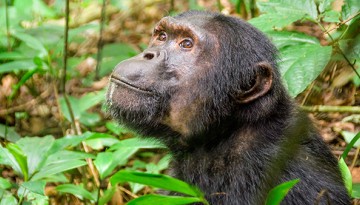
When an asteroid struck 66 million years ago and wiped out most dinosaurs and three-quarters of life on Earth, early ancestors of primates and marsupials were among the only tree-dwelling (arboreal) mammals that survived, according to a new study.
The rocky surface of Earth’s geology may provide a buffer for climate change to absorb excess carbon, according to a new Cornell paper in Global Biogeochemical Cycles.