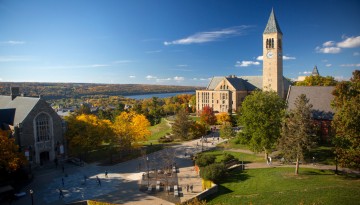
Twenty faculty and professional staff members in four of Cornell’s state contract colleges have been selected for the 2020–21 State University of New York Chancellor’s Awards for Excellence.
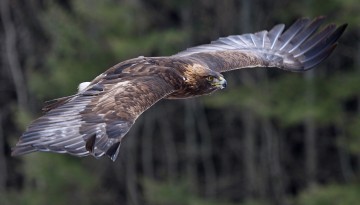
A Cornell-led collaboration used wind speed data and the measured accelerations of a golden eagle outfitted with GPS technology to show that turbulence is a source of energy that birds may use to their advantage.
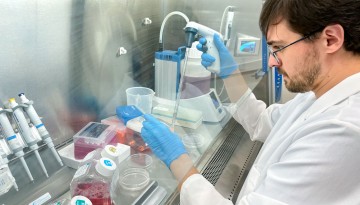
Julius Judd, a fourth-year doctoral student in the graduate field of molecular biology and genetics, has been selected for the 2021 Harry and Samuel Mann Outstanding Graduate Student Award.
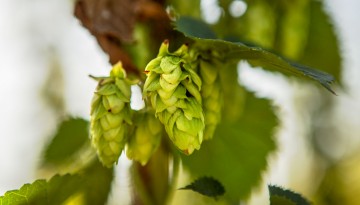
A $300,000 investment from New York state has paved the way for a new hops breeding program at Cornell AgriTech, which will grow and develop signature New York hops varieties in support of the state’s $3.4 billion craft brewing industry.
Six graduate students were awarded 2021 Hsien and Daisy Yen Wu Scholarships. These scholarships recognize graduate students for their academic ability, performance and character as well as financial need.
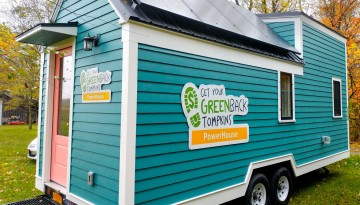
Part of the Cornell Cooperative Extension(CCE) Tompkins County Get Your Greenbacks program, the PowerHouse helps CCE educators tackle environmental issues and social inequities by making energy savings concepts tangible and easy to understand.
A Schuyler County-Cornell pilot project could help New York farmers diversify their crops and give regional food manufacturers a cost-effective source for the popular legume.