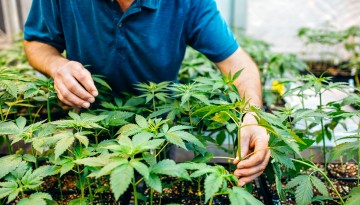
A new Cornell study debunks misinformation on websites and in news articles that claim that environmental or biological stresses – such as flooding or disease – cause an increase in THC production in hemp plants.
The 2020 nationwide lockdown India imposed in response to the COVID-19 pandemic caused disruptions that negatively impacted women’s nutrition, according to a new study from the Tata-Cornell Institute for Agriculture and Nutrition.
Two new publications examining cassava flowering reveal insights into the genetic and environmental factors underpinning one of the world’s most critical food security crops.
A new study describes how an interdisciplinary team of Cornell researchers used a state-of-the-art microscopy technique to reveal protein structures and key steps of a CRISPR-Cas system that holds promise for developing an improved gene editing tool.
Cornell researchers will develop the first high-resolution carbon monitoring system for East Africa that combines “bottom up” ecological modeling with “top down” satellite data, thanks to a three-year, $1 million NASA grant.
Lead New York, a leadership development program for adult professionals in the food, agriculture and natural resource sectors, has announced the members of its 19th class.
Breeding Insight, a new program funded by the U.S. Department of Agriculture through Cornell University, will share latest tools with breeders in the U.S.
After stifling temperatures parked over the Pacific Northwest in late June, scientists – including Cornell’s Flavio Lehner – said climate change triggered it.