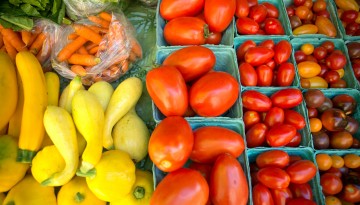
Farmers markets and roadside stands are more successful in communities with more nonprofits, social enterprises and creative industries, according to a new study.
Members of the Prosocial Project have received a four-year, $1.19 million grant from the National Science Foundation for work on understanding the emergence and maintenance of norms to deter negative online behavior.
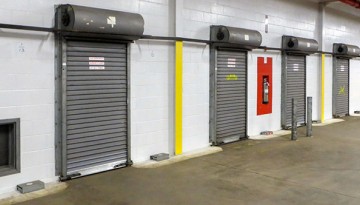
Food distribution centers can protect the food supply more effectively by setting traps near features that attract rodents, rather than a set distance apart, a new Cornell-led study found.
The funding aims to help the U.S. dairy industry become carbon neutral while supporting farmers’ livelihoods and will measure greenhouse gas emissions at a working New York dairy.
David Hysell, Ph.D. ’92, professor in the Department of Earth and Atmospheric Sciences, is using NSF funding to develop radar tools and techniques for monitoring space weather, including the creation of a new radar system at Cornell.
Phil McMichael, whose decades of research into equitable, sustainable, and just food systems reshaped development thinking, will become emeritus professor of global development on July 1.
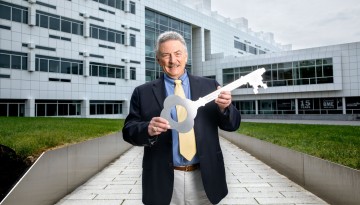
When Lou Walcer ’74 stepped into the new business incubator in Weill Hall 10 years ago, he saw opportunity. Now, the center has enjoyed a decade of success.
Students, faculty and staff were recognized for their commitment to diversity, equity and inclusion and excellence within the graduate community at the 2021 Graduate Diversity and Inclusion Awards and Recognition Celebration.