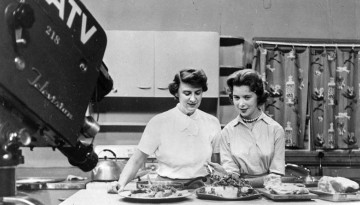
The university beginning online classes for the remainder of the semester continues a long history of remote instruction. Liberty Hyde Bailey and Martha Van Rensselaer designed Cornell’s first correspondence courses in 1896 and 1900, respectively.
Cornell has a long-standing commitment to help lead the fight against climate change, and on April 2 it became a founding member of the International Universities Climate Alliance.
Many Cornell faculty members use their own experience as first-generation college students to mentor their current first-gen students. Cornell offers numerous resources to empower first-gen students to thrive at college.
Food industry professionals can learn how the novel coronavirus might affect their workers and their consumers, thanks to a series of virtual office hours held by staff at the Institute for Food Safety at Cornell.
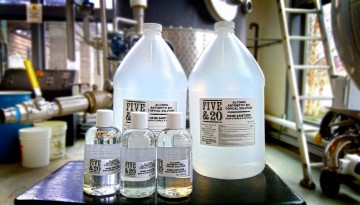
In the battle to keep workers safe during the COVID-19 pandemic, nearly 40 craft distilleries in New York state have turned to making hand sanitizer with guidance from Cornell AgriTech.
The coronavirus pandemic has challenged Cornell students, as they’ve waited for online instruction to begin April 6. But many are responding with resilience, staying sharp and taking care of others, and themselves.
Virtual events and resources at Cornell include: Images of Dragon Days past; Cornell experts discuss COVID-19; “Cosmos” and spotlight on women artists at the Johnson Museum; student theater and film updates; and a citizen science project surveying breeding birds.
To better predict volcanic activity, Cornell geologists have proposed a new system to discern the stages of a volcano’s unrest – as seen from perceptive satellites.