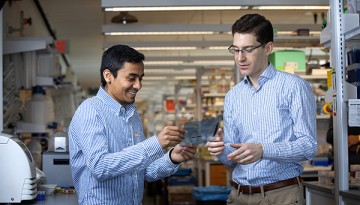
Cornell chemical biologist Jeremy Baskin has been recognized for his innovative work with a Walter A. Shaw Young Investigator Award from the American Society for Biochemistry and Molecular Biology.
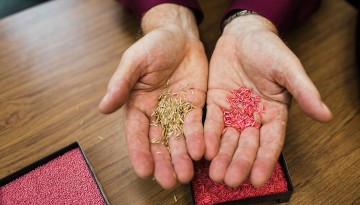
Sen. Charles Schumer, D-N.Y., on Aug. 2 announced $500,000 in funding for the USDA establish the first industrial hemp seed bank in the U.S., co-located at Cornell AgriTech, which will be used to breed and study new hemp cultivars.
Scientists have long suspected that rapid evolutionary change in fish is caused by intense harvest pressure. Now, for the first time, scientists have unraveled the genomic changes that caused it.
Prabhu Pingali, founder of the Tata-Cornell Institute for Agriculture and Nutrition, is making progress in his quest to discover why 15% of Indians – nearly 200 million people – remain malnourished.
A measure to conserve groundwater in northwestern India has led to unexpected consequences: Added air pollution in an area already beset by haze and smog.
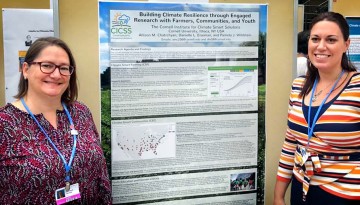
A Cornell researcher is collaborating to help Scotland achieve net zero carbon emissions by 2045 through education to support new, stronger climate-action policies.
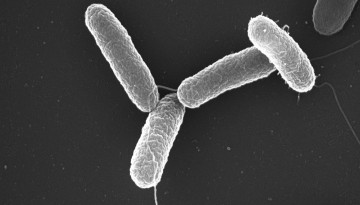
The world’s food supply will become safer as the food industry shifts to high-resolution, whole-genome sequencing – which examines the full DNA of a given organism all at once.
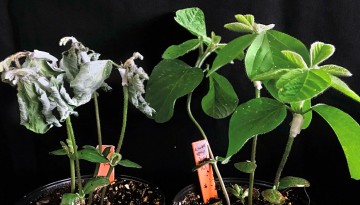
Protecting crops from pests and pathogens without pesticides has been a longtime goal of farmers. Researchers at Boyce Thompson Institute have found that compounds from microscopic soil roundworms could achieve this aim.