Maple season off to fits and starts

In spite of 2018 being the fifth warmest February in New York state’s recorded history, March has been unseasonably cool, which has stalled the state’s maple syrup production.

Farmers get guidance on growing new perennial grains

While most industrial grain crops are annuals that must be replanted every year, a new perennial grain called Kernza has hit the markets with growing interest from restaurants, bakeries and brewers.

New obesity solutions may be on the tip of your tongue

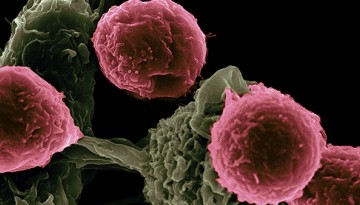
Cornell food scientists have discovered that when mice are fed a high-fat diet and become obese, they lose nearly 25 percent of their tongue’s taste buds – possibly encouraging them to eat more food.

So close, yet so far: Making climate impacts feel close by may not inspire action

Upending the conventional thinking in climate change communication, Jonathon Schuldt finds when people say faraway climate impacts feel geographically nearby, they don’t necessarily support policies that would stop them.

Study showing power of single butterfly gene earns Cornell team top prize

Robert Reed won the 2017 Cozzarelli Prize for scientific excellence and originality for proving that butterfly wing color and iridescence are activated by a single gene.

Students urge lawmakers to support federal student aid

Cornell students descended on Capitol Hill March 14 for Student Aid Advocacy Day to share their experiences with financial aid.

Cornell Center for Health Equity established

Researchers at Weill Cornell Medicine and Cornell’s Ithaca campus have established a new center to better understand why health outcomes vary among demographic groups.

$1.6M grant may turn sediment into port city pay dirt

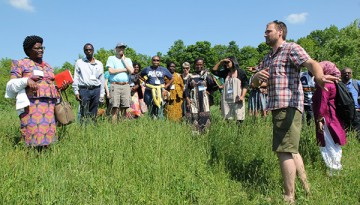
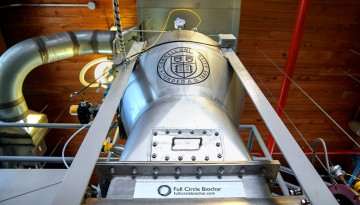
Landscape Architecture’s Brian Davis and Sean Burkholder, University at Buffalo, received a $1.6 million grant from the Great Lakes Protection Fund for creating ecologic gold from shipping port sediment.

At 90, Gilbert Levine leaves Einaudi Center post

Gilbert Levine, emeritus professor of biological and environmental engineering, first retired in 1983 after more than 30 years on the Cornell faculty. He's giving it another try at age 90.