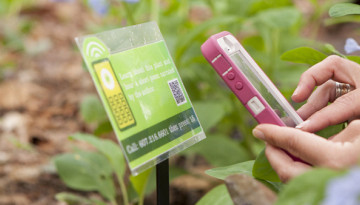
Cornell Botanic Gardens has expanded its self-guided walking tours to Spanish and Mandarin, the two most spoken languages other than English among Cornell students and their families. The gardens partnered with two campus programs, where students translated 10 tours into the two additional languages, and recorded audio for 26 stops around the cultivated gardens and F.R. Newman Arboretum.
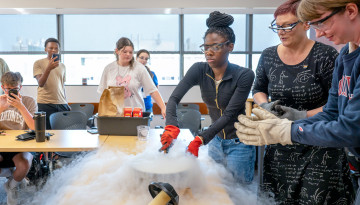
Middle and high school students from across New York state spent three days discovering potential career paths during the annual 4-H Career Explorations Conference, held June 30 to July 2 at Cornell.
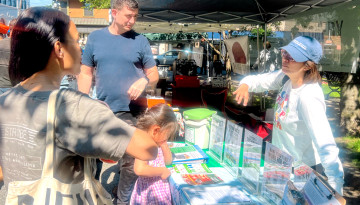
The Cornell Climate Stewards program gives New York state residents the tools and confidence to address the impacts of climate change in their communities.
China’s Scientific Outlook on Development program, which tied local leaders’ job performance evaluations to environmental quality improvements, had negative impacts on the country's agricultural economy, researchers found.
Online content creator burnout is, in part, “unspeakable” – a product of a confluence of factors, including the informal nature of platform labor and the privileged status of creative work, seen by many as a “dream job.”
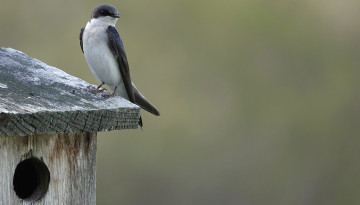
Tree swallows in the northern U.S. and Canada face the greatest risk from climate change despite responding to temperature the same way as tree swallows in the southern U.S.
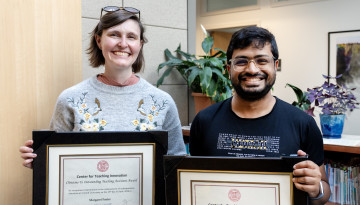
This year's University-Wide graduate teaching conference celebrated excellence in teaching, recognizing Margaret Foster and Naman Agrawal with the Cornelia Ye and Christine Ye Awards for Outstanding Teaching Assistance.
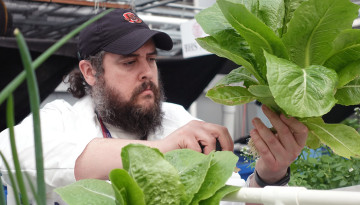
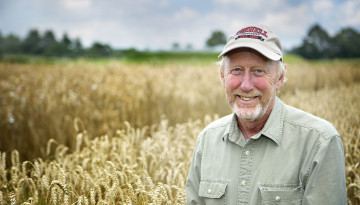
Led by Mark Sorrells and decades of innovation and collaboration, Cornell's small grains breeding program has developed higher-yielding, pest- and disease-resistant grain varieties that have strengthened the agricultural industry in New York state.