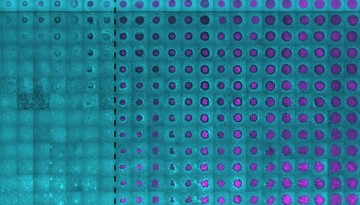
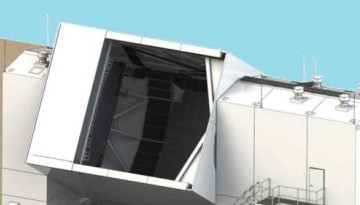
Cornell researchers developed a multimodal platform to image microbe-semiconductor biohybrids with single-cell resolution, to better understand how they can be optimized for more efficient energy conversion.
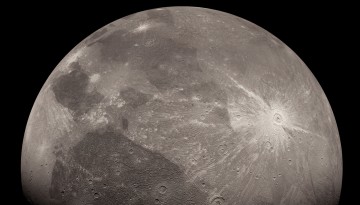
With its sensitive infrared cameras and high-resolution spectrometer, the James Webb Space Telescope is revealing new secrets of Jupiter’s Galilean satellites – in particular Ganymede, the largest moon, and Io, the most volcanically active.
Two faculty members in the College of Arts and Sciences, Christine Balance and Linda Nicholson, are the recipients of the 2023 Faculty Award for Excellence in Research, Teaching and Service through Diversity.
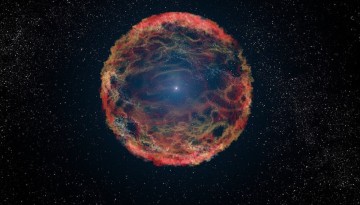
Anna Y. Q. Ho and others chosen will pursue science investigations that will contribute to Israel’s first space telescope mission, planned to launch into geostationary orbit around Earth in 2026.
In their project, “Mostly Harmless Statistical Decision Theory,” three Cornell economists in A&S will develop innovative methods for data-driven policy choices.
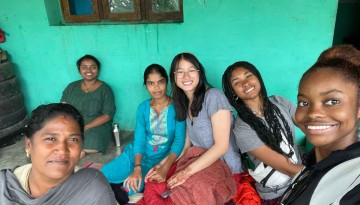
Denise Rose worked with other Cornell students on a study of mental health in India through the Cornell-Keystone Nilgiris Field Learning Summer Program.