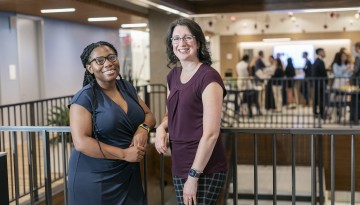
The Graduate School offers Summer Foreign Language Grants to help humanities students engage in summer learning opportunities. Thirteen doctoral students were awarded grants for study during summer 2023.
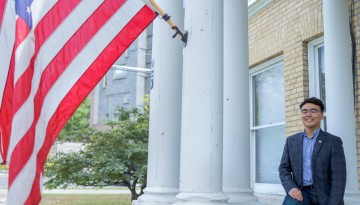
Andy Shin ’23, M.P.A. ’25, gained citizenship in November after 12 years in the U.S.; he'll celebrate his first Independence Day as a citizen with fellow student veterans.
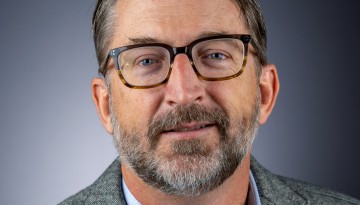
Steven Jackson, professor of information science in the Ann S. Bowers College of Computing and Information Science, with a dual appointment in the College of Arts and Sciences, has been named vice provost for academic innovation.
A collaboration including Cornell astrophysicists has found the first evidence of low-frequency gravitational waves believed to be generated by merging pairs of supermassive black holes.
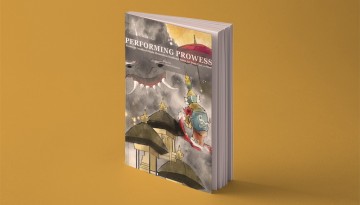
Featuring an introduction by professor Kaja McGowan and essays by Cornell alumni and current doctoral candidates, "Performing Prowess" traces the ways cultural forces of Hindu belief have persisted in Southeast Asia
The “widowhood effect” – the tendency for married people to die in close succession – is accelerated when spouses don’t know each other’s friends well, new Cornell sociology research finds.
“Campfire,” an original short film by Associate Professor Austin Bunn, won the Provincetown International Film Festival’s "best queer short" award, making it eligible for an Academy Award nomination.
“Empires of Complaints: Mughal Law and the Making of British India, 1765-1793” by Robert Travers won honorable mention from the Law and Society Association's James Willard Hurst Book Prize.