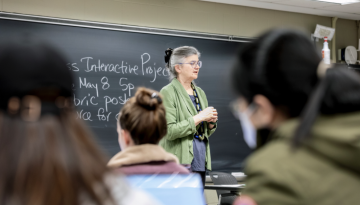
As society ponders the dangers and unknowns of AI, Liz Karns is giving statistics students a first-hand look at the potential implications for users of large-scale predictive models, in hopes of increasing their empathy and awareness of unintended consequences.
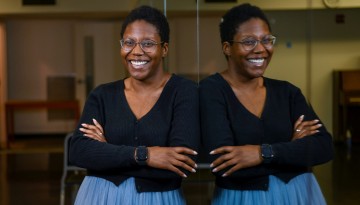
On June 2, the Ithaca theater organization Civic Ensemble will premiere “Fertile Grounds,” a community-based play that invites the audience onto a fictional farming cooperative involving people of color to explore the relationship of grief, community and wellness.
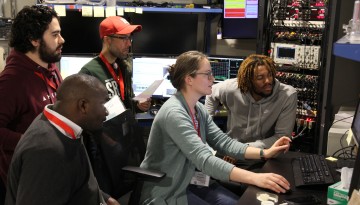
The HEXT workshop empowers students to become productive members of the CHESS user community by combining informative lectures, hands-on demonstrations, and instruction in proposal writing. With its focus on attracting diverse participants and providing practical training, the HEXT workshop sets the stage for a more inclusive and vibrant synchrotron research landscape.
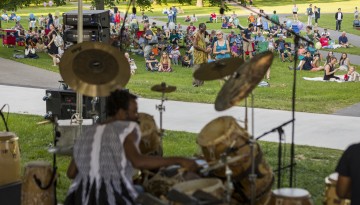
The 2023 Free Summer Events Series at Cornell will offer a fresh mix of entertainment and education open to the public. Presented by the School of Continuing Education (SCE), the events take place at 7 p.m. on select Wednesdays and Fridays, July 7 through July 28.
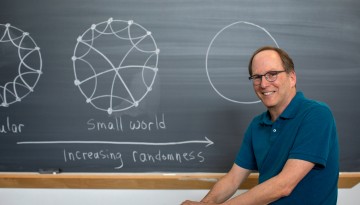
In 1998, Professor Steven Strogatz and then-student Duncan Watts, Ph.D. '97, published a model that launched the field of network science – the results of which are ubiquitous in today’s world.
Bolstering its commitment to broader engagement, the College of Arts and Sciences has established the Winokur Professorship in the Public Understanding of Science and Mathematics with mathematician Steven Strogatz as the inaugural holder of the chair.
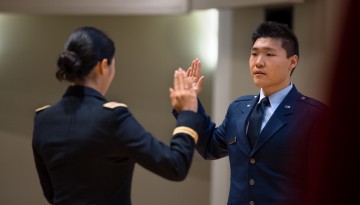
Graduating members of the Tri-Service Brigade received commissions to begin their military service – including the brigade’s first commission into the U.S. Space Force – at a May 26 ceremony in Statler Auditorium.
In a two-day celebratory program, Merrill Scholars recognized the high school teacher or mentor who most impacted their early education and the Cornell faculty or staff member who contributed most significantly to their college experience.