Language emerges from a continual flow of creative improvisation, not biologically evolved genes or instincts, Morten H. Christiansen and a co-author argue in a new book, “The Language Game.”
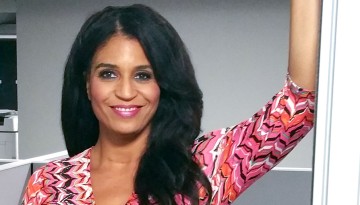
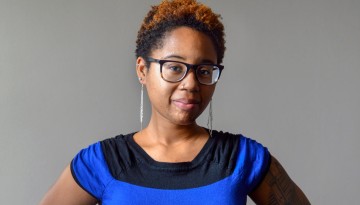
Tiffany Norwood ’89, CEO of Tribetan, has been named Cornell Entrepreneur of the Year 2022. She will be honored on campus April 28-29 at the Entrepreneurship at Cornell Celebration event.
A Cornell-led collaboration used electrochemistry to stitch together simple carbon molecules and form complex compounds, eliminating the need for precious metals or other catalysts to promote the chemical reaction.
For the past year, Cornell doctoral students Megan Barrington and Christian Tate have been living, thinking and working on the red planet Mars, digitally commuting from our own blue world.
Scientists have uncovered a set of neurons in fruit flies that shut down in cold temperatures and slow reproduction, a system conserved in many insects, including mosquitoes, which could provide a target for pest control.
Journalistic fact checks are a more effective counter to COVID-19 misinformation than the false news tags commonly used by social media outlets, according to new Cornell research.
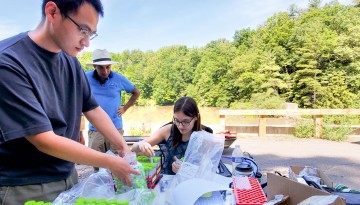
A group of graduate students from Cornell is collaborating with students across the country to create a scholarly podcast focused on issues of diversity in archaeology.
Maya Phillips, a critic at large for The New York Times, has been named winner of the 2020-21 George Jean Nathan Award for Dramatic Criticism. The award committee comprises the heads of the English departments of Cornell, Princeton and Yale Universities.