Cornell researchers were able to stretch and twist individual molecules of a conjugated polymer and measure its mechanical and kinetic properties, gaining insights that could eventually lead to more flexible and robust soft electronic materials.
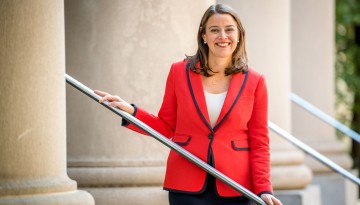
Colleen L. Barry, a professor and department chair at the Johns Hopkins University Bloomberg School of Public Health, has been named the Cornell Jeb E. Brooks School of Public Policy’s first dean, effective Sept. 15.
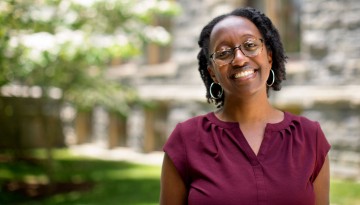
The holiday celebrates the day enslaved people gained their freedom. But they lacked political power then, as Black people too often do today, says associate professor Jamila Michener.
Elizabeth Kellogg, assistant professor of molecular biology and genetics in the College of Arts and Sciences, has been named to the Pew Scholars Program to pursue research into advancing gene editing capability.
Many Graduate School students, alumni and staff have learned to use remote and hybrid environments to their benefit, creating a broader diversity of panelists and participants for online professional development programs.
A Cornell-led collaboration used wind speed data and the measured accelerations of a golden eagle outfitted with GPS technology to show that turbulence is a source of energy that birds may use to their advantage.
A 2021 Outstanding Achievement Award from the University of Illinois Department of Mathematics recognizes advances in the field by Michael Stillman, professor of mathematics.