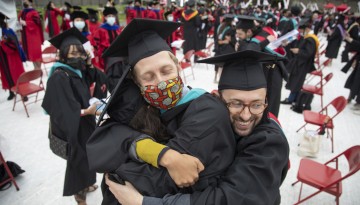
Four Commencement ceremonies were held May 29-30, spaced out to meet health guidelines. Though campus was less crowded, the campus mood was warm and celebratory.
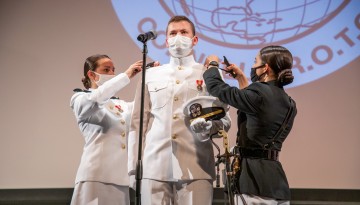
In a hybrid ceremony May 28 in Bailey Hall, 21 graduating members of Cornell’s Reserve Officers’ Training Corps received commissions as officers in the Army, Navy, Air Force and Marines.
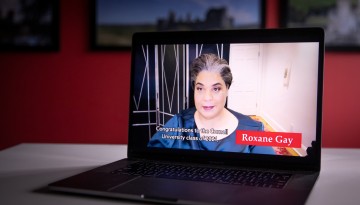
In her Convocation address, author and social commentator Roxane Gay challenged the Cornell Class of 2021 to be true to themselves and to their dreams, however wild they may be.
Ben Leff ’16 and government professor Peter Enns are co-founders of Reality Check Insights, a company that delivers data insights related to people’s attitudes, preferences and behaviors to media organizations, political groups and others.
With a grant from the Society for the Humanities, Julia Chang has developed an online game with an undergrad computer science researcher, based on her research on disability in modern Spain. The game will launch during an online event June 2 at 2 p.m.
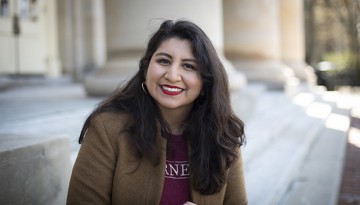
First-person essay from the spring 2021 undergraduate teaching assistant for course “The First American University” (AMST 2001) about how the class has allowed her to see Cornell as more than merely an institution.
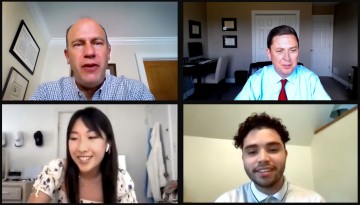
In a virtual ceremony May 24, this year's 37 Merrill Presidential Scholars, who represent the top 1% of graduating seniors, recognized the high school teacher and university faculty or staff member who most influenced their academic development.
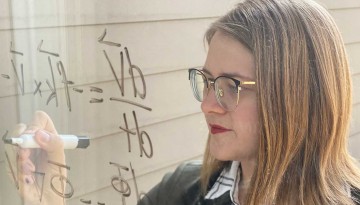
Ph.D. student Ekaterina Landgren has received a 2021 Zonta Amelia Earhart Fellowship. The program recognizes women pursuing doctoral degrees in aerospace engineering and space sciences.
Doctoral student Charlotte Logan is one of six Cobell Graduate Summer Research Fellows for 2021. This fellowship will provide Logan with funding to support her work on Haudenosaunee language revitalization.