A Cornell-led collaboration identified an unusual behavior of superfluid helium-3 when it undergoes a phase transition between two different superfluid states – a transition that theoretically shouldn’t happen reliably.
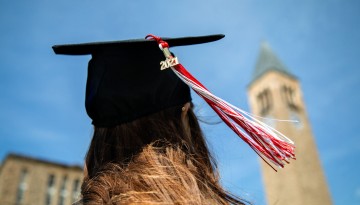
This weekend’s ceremonies for Cornell’s 153rd graduating class will look different due to COVID-19 safety precautions and protocols – but they promise to be as memorable and meaningful as ever.
Cornell's Adult University invites alumni, their friends and family, and the general public to expand their minds this summer by taking live, online courses for adults and youth taught by Cornell faculty and graduate students.
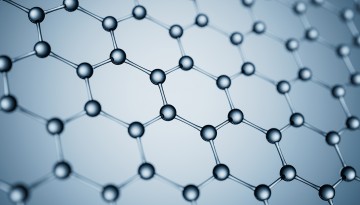
An interdisciplinary team of Cornell researchers has created a cohort of new quantum metamaterials that can achieve superconductivity at temperatures competitive with state-of-the-art solid-state materials synthesis.
After a strong 30-year relationship, the Vietnam Veterans of America honored Cornell ROTC – the Tri-Service Brigade – with a state-level and national award.
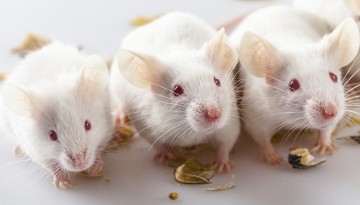
Cornell researchers have developed a technique for revealing how the motor cortex in the brain works – by focusing on a mouse’s tongue when it licks a water spout.
The university’s acknowledgment states that the Ithaca campus is located on the traditional homelands of the Gayogo̱hó꞉nǫɁ, also known as the Cayuga Nation.
The College of Arts and Sciences has awarded 14 New Frontier Grants totaling nearly $2 million to faculty members pursuing research projects ranging from the physics of quantum computing to the design of new musical instruments.
During 2020, Cornell’s Society for the Humanities chose “Afterlives” as its theme for 2021-22. Scholars from all over the world and all around the College of Arts and Sciences responded to the call, resulting in a record number of applications for the Society’s fellowships.