The Institute of Politics and Global Affairs has launched the Campaign for the Future of Democracy, which will work to restore respect for democratic norms and to strengthen democratic resilience.
The grant from The Andrew W. Mellon Foundation’s Just Futures Initiative will bring together scholars from across the university and beyond to study the links between racism, dispossession and migration.
Ding Xiang Warner won a 2020 American Council of Learned Societies Fellowship to study World War I trench art – the 3D creations made by Chinese laborers who dug the trenches pivotal to the allied effort in WWI.
A comparative analysis of COVID-19 policies across 18 countries, led by researchers from Cornell and Harvard University, shows that varied public health and economic outcomes are linked to underlying characteristics of each society.
Mobile contact-tracing technology has emerged as one way to contain COVID-19, but contact tracing apps, which require a critical mass of adopters to be effective, face serious obstacles in the U.S., Cornell researchers have found.
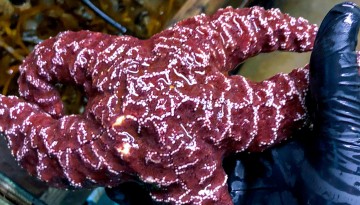
New Cornell-led research suggests that starfish, victims of sea star wasting disease, may actually be in respiratory distress, as nearby organic matter and warming oceans rob them of their “breath.”
A group of Cornell students has launched a campaign to free a Salvadoran woman, whom they befriended through a class focused on refugees and immigration, from an immigration detention center.
Grants awarded recently by the Cornell Center for Social Sciences seeded research projects on topics ranging from COVID-19 and policing to clean energy and product design, led by scholars from across the university.