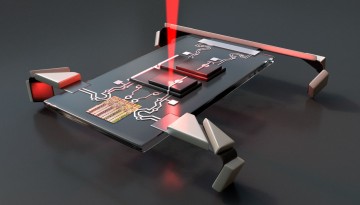
A Cornell-led collaboration has created the first microscopic robots that incorporate semiconductor components, allowing them to be controlled – and made to walk – with standard electronic signals.
A project funded by a 2017 grant from the provost’s Active Learning Initiative has resulted in calculus students and instructors seeing academic benefits, and a path to more consistently active pedagogy.
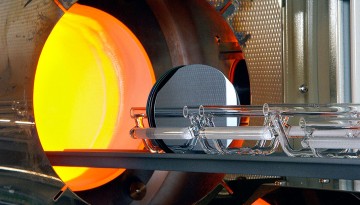
The National Science Foundation has renewed its funding for the Cornell NanoScale Science and Technology Facility with a five-year, $7.5 million grant.
Craving a fruit smoothie, but don’t want to haul out the blender? Cornell’s food product development team created Smoothie Bites, which won a national contest.
When fall semester instruction begins online and in person Sept. 2, the 3,296 members of Cornell’s Class of 2024 just might be the most nimble group in the university’s history.
The rise of social media is actually undermining democratic regimes and giving authoritarian regimes the advantage, according to a new book from Sarah Kreps.
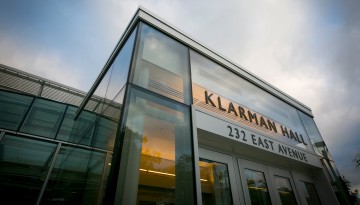
Applications are being accepted through Oct. 15 for the second cohort of the Klarman Postdoctoral Fellowship program, in the College of Arts and Sciences.
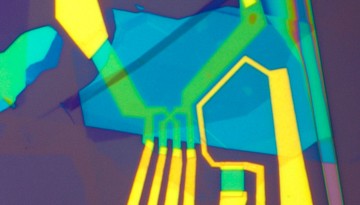
Cornell researchers used an ultrathin graphene “sandwich” to create a tiny magnetic field sensor that can operate over a greater temperature range than previous sensors, while also detecting miniscule changes in magnetic fields that might otherwise get lost within a larger magnetic background.
While many other animals are known to engage in group fidelity, where one male mates and socially bonds exclusively with two or more females, a new study documents this behavior for the first time in an amphibian.