Violinist Ariana Kim, associate professor of music, has collaborated on a multimedia piece for solo violin and spoken word, “How Many Breaths? – In Memory of George Floyd and Countless Others,” which premieres online Sept. 27.
Sports films make important cultural statements, according to Samantha Sheppard, the Mary Armstrong Meduski ’80 Assistant Professor of Cinema and Media Studies, in her book, “Sporting Blackness.”
Noted authors, scholars and poets will celebrate Toni Morrison, M.A. ’55, as the College of Arts and Sciences hosts a livestreamed reading of her first novel “The Bluest Eye,” celebrating the 50th anniversary of its release.
In her new book, “Togo Mizrahi and the Making of Egyptian Cinema,” professor Deborah Starr reintroduces Mizrahi’s films and career, arguing that he and his work deserve a prominent place in Egyptian cinema history.
The Program on Ethics & Public Life in the Department of Philosophy is sponsoring a public debate series, which kicks off Oct. 1 with “Health vs. Economy in the Pandemic Control: What is the Right Balance?”
The history of superconducting materials has been a tale of two types: s-wave and d-wave. Now, Cornell researchers have discovered a possible third type: g-wave.
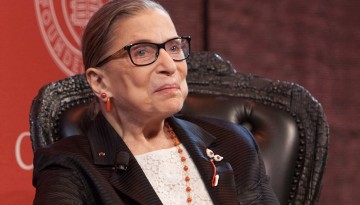
Eduardo M. Peñalver ’94, the Allan R. Tessler Dean of Cornell Law School, reflects on the life and career of Supreme Court Justice Ruth Bader Ginsburg ’54, who died Friday at age 87.
Ruth Bader Ginsburg ’54, whose legal career in the fight for women’s rights, equal rights and human dignity culminated with her ascent to the U.S. Supreme Court, died Sept. 18 in Washington, D.C. She was 87.