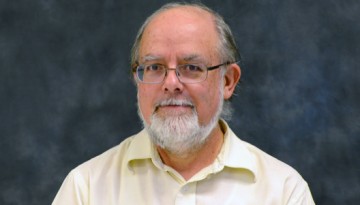
The American Astronomical Society Division for Planetary Sciences will honor Cornell astronomy professor Phil Nicholson with the 2019 Harold Masursky Award.
Published research by chemist Nozomi Ando, performed at CHESS, has identified a new vulnerability in bacteria that offers a possible avenue for dealing with antibiotic resistance.
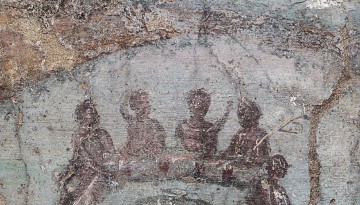
A new book from Caitlin Barrett, associate professor of classics, explores the reasons why many households in Pompeii chose to use Egyptian imagery throughout their garden spaces.
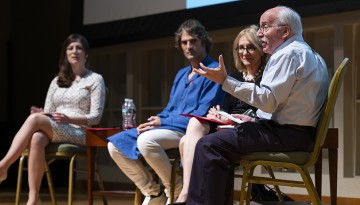
Panelists discussed journalism and how news is consumed in “International Politics and the Fourth Estate: The Role of the Media in Social and Political Movements Worldwide,” a Cornell Reunion event.
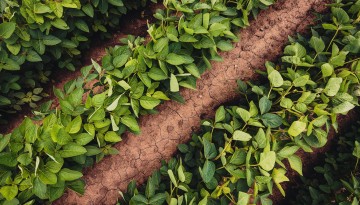
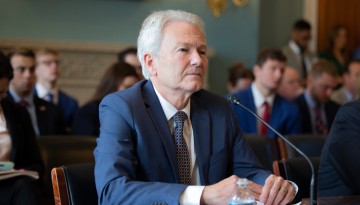
David Wolfe, professor in the School of Integrative Plant Science, told a congressional committee in a hearing on agricultural resiliency that climate change impacts have been more complex and severe than scientists had forecast three decades ago.
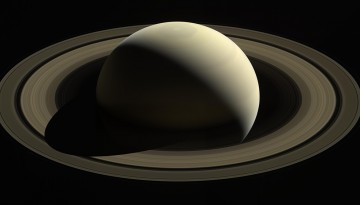
Instead of uncovering scientific answers, the spectral images from a Cassini flyby of Saturn’s rings triggered more questions than answers, says new research published June 13 in Science.
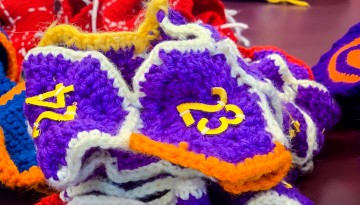
Retired adjunct associate professor Daina Taimina’s presentation during Reunion weekend introduced the release of the second edition of her book, “Crocheting Adventures With Hyperbolic Planes.”
Just 10 taxis equipped with mobile sensors can survey a third of Manhattan’s streets in a day, inexpensively gathering valuable data about factors such as air quality, street conditions and bridge stability to provide an accurate and timely snapshot of a city’s health, according to a new study including a Cornell researcher.