The Mars rover Opportunity, NASA’s robotic geologist fitted with an array of tools to search for evidence of water, ended its mission Feb. 13 – three weeks after its 15th anniversary and long past its 90-day warranty.
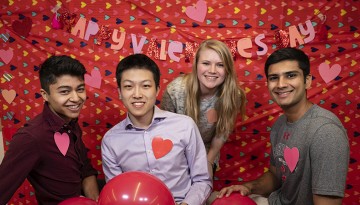
Cornell students have developed an algorithm and a set of survey questions to help their busy classmates find their “perfect match” in time for Valentine's Day.
Building on Cornell’s decades of fundamental and comparative research in the immunological sciences, Provost Michael Kotlikoff has announced the creation of a new Cornell Center for Immunology.
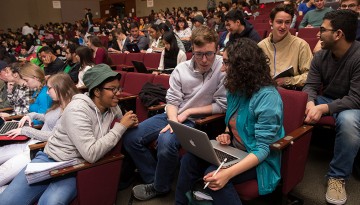
Innovative projects to enhance undergraduate teaching and learning in nine departments have received funding administered by Cornell’s Active Learning Initiative.
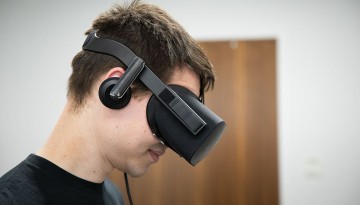
An exercise in learning phases of the moon conducted by the Virtual Embodiment Lab showed no real difference in learning between VR, hands-on and computer simulation methods.
A Rural Humanities scholarly initiative, funded by a grant from the Mellon Foundation, will foster deeper engagement with rural communities, emphasizing “knowledge with a public purpose.”
A nano-sized guitar string vibrates and crackles in an unexpectedly organized and intricate way, according to researchers who devised a way to listen to a nanoscale guitar for the first time – and then played the Cornell alma mater on it.