Data from the last days of the NASA spacecraft Cassini show that Saturn’s beautiful, extensive rings are relatively young – perhaps created when dinosaurs roamed the Earth.
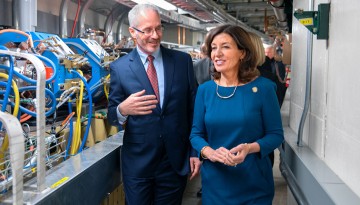
Fourteen months after Lt. Gov. Kathy Hochul came to announce funding for CHESS-U, the upgrade is officially complete as she returns for a ceremony marking the end of the project.
John H. Muse of the University of Chicago and arts journalist Helen Shaw have won the 2017-18 George Jean Nathan Award for Dramatic Criticism, administered by Cornell’s Department of English.
Assistant Professor of Music Catherine M. Appert looks at Senegalese hip-hop, its mythology and ethnography in her book “In Hip Hop Time: Music, Memory, and Social Change in Urban Senegal.”
Cornell University Library offered a workshop for graduate students and postdocs in engineering, math and physical sciences on the resources that can jump-start their careers.
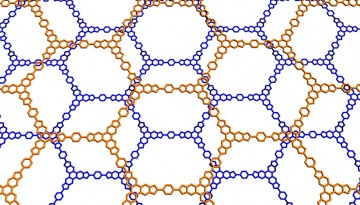
The strength of the attraction between molecules in two-dimensional materials, known as van der Waals forces, is dependent on the size of the empty spaces in the material, researchers have found.
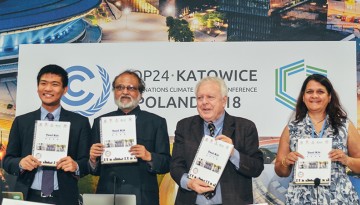
In a whirlwind of seminars, plenary sessions and corridor conversations, 17 Cornell students and six faculty attended COP24 in Katowice, Poland in December.
A new edition of Jean Toomer’s “Cane,” edited by Cornell professor George Hutchinson, revives the 1923 novel of the African-American experience as “a book for our times.”