Researchers from the Cornell-led Center for Bright Beams are trying to develop new ways to make the next generation of superconducting particle accelerators more efficient.
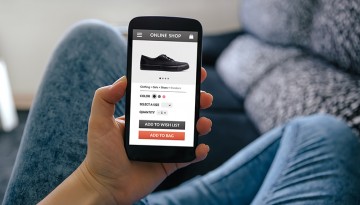
On secondhand marketplaces like eBay, people trust online sellers who post their own high-quality photos of items for sale more than they trust those who use stock images or poor-quality photos, a Cornell Tech study has found.
Cornell Tech researchers developed a tool that causes smartphones to vibrate when users exceed time limits on certain apps, reducing usage of the apps by 20 percent and helping people tackle digital addiction.
A physics lab course redesigned as an active learning course earned praise from participating professors and students at a December poster session displaying students’ final projects.
Sabrina Karim, assistant professor of government, has been awarded a grant to assess the barriers affecting women’s participation in military and police forces involved in peacekeeping missions.
Faculty members Denise Green and Rachana Kamtekar have received support for preservation and research projects from the National Endowment for the Humanities.
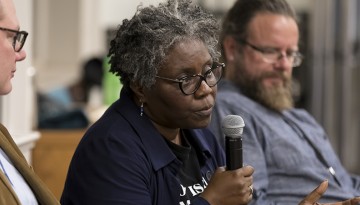
The study of the history of capitalism at Cornell is fueled by insightful, big-picture questions, many of which were raised during a Nov. 15 roundtable discussion.
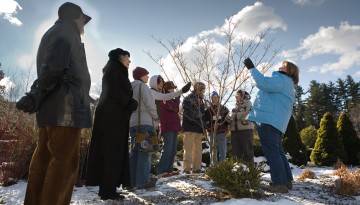
Events on campus from this week to the end of winter break include the Recognition Ceremony for December Graduates, a winter solstice garden tour, exhibits coming down soon and the first Soup & Hope of 2019.