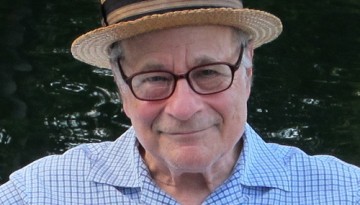
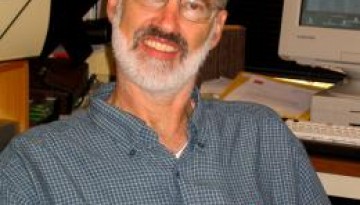
Bernd Lambert, an authority on kinship among Pacific islanders of the Republic of Kiribati and professor of anthropology emeritus, died Jan. 3, 2015 at his Ithaca home. Lambert joined Cornell faculty in 1964.
Robert Elliott Johnston, professor of psychology, died Dec. 20 at Cayuga Medical Center in Ithaca. He researched animal behavior and the mechanisms of behavior in a naturalistic or evolutionary context.
Marking the 150th anniversary of the end of the Civil War, prize-winning author Douglas Egerton will share his expertise on this critical period in U.S. history as Cornell’s Merrill Family Visiting Professor.
The first extra-biblical archive from the exiled Judean community in Babylonia in the sixth and fifth centuries B.C. has been published as part of a series edited by Cornell professor David I. Owen.
Theorists and experimentalists working together at Cornell may have found the answer to a major challenge in condensed matter physics: identifying the smoking gun of why “unconventional” superconductivity occurs.
Students in architecture, city planning, anthropology, landscape architecture and Asian and religious studies spent several days together this fall exploring conditions in Southeast Asian cities.
Michael Fontaine's studies underscore that many of our current concerns are rediscoveries of themes from Rome and Greece. He has been tracing these parallels in a field not often studied in classics departments: modern psychiatry.
Computerized text analysis of scientific papers in the arXiv repository shows that many authors use text from previous papers of their own and others, not always with attribution.