Future pandemics can be averted if the world’s governments eliminate unnecessary wildlife trade and adopt holistic approaches, according to experts at a Feb. 23 virtual conference.
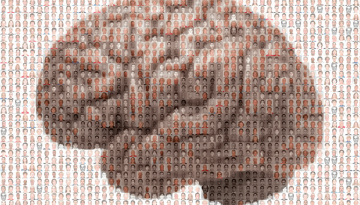
The Bronfenbrenner Center for Translational Research is launching a new project – the Community Neuroscience Initiative, or CNI – that will build connections between neuroscience, the social sciences and communities.
Cornell and WWF will host a virtual conference Feb. 23 focused on the link between humans and wildlife, and the subsequent prevention of future pandemics.
As CCSS fellows, a dozen faculty members representing seven colleges and schools will pursue ambitious research projects on issues ranging from political polarization to environmental justice.
Archivists, curators and librarians are finding virtual ways to help faculty members teach, using gems from Cornell University Library’s rare collections, from medieval texts on parchment to punk show flyers.
Grants awarded recently by the Cornell Center for Social Sciences seeded research projects on topics ranging from COVID-19 and policing to clean energy and product design, led by scholars from across the university.
To deflect future world food crises created by climate change, a Cornell-led international group has created a road map for global agricultural and food systems innovation.
Cornell Atkinson is soliciting nominations for The Earthshot Prize, a new global award supported by The Duke and Duchess of Cambridge to tackle the world’s biggest environmental challenges.
In the second “Racism in America” webinar, presented Nov. 19 by the College of Arts and Sciences, a panel of four Cornell faculty experts discussed discrepancies in education and housing.