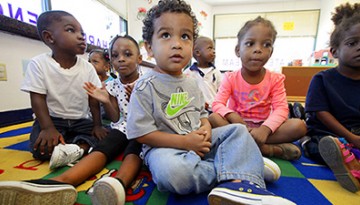
Cornell researchers are working with Head Start Centers and day schools in New York City on early intervention to promote development of spatial skills and language acquisition in preschoolers.
Six students are researching fencing, teaching English, exploring how regions recover from natural disasters, and immersing themselves in Asian languages, thanks to grants from the Department of Asian Studies in the College of Arts and Sciences.
Experiencing a range of positive emotions, from enthusiasm to amusement, is linked to lower levels of inflammation, says a new study by Anthony Ong. He and his team drew on approaches used to measure the biodiversity of ecosystems.
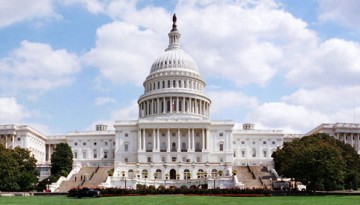
McNair scholars from Cornell and Upward Bound students visited the Capitol Hill offices of lawmakers from eight states to advocate for the educational access programs.
A new study draws on experiences of members of care teams working with end-of-life patients to identify strategies to improve quality of life through policies, palliative care practices and design.
Cornell materials scientists and bioelectrochemical engineers have created an innovative, cost-competitive electrode material for cleaning pollutants in wastewater.
University of Pittsburgh professor Karen Matthews explored biological links to persistent social inequalities in childhood health during the 2017 Bronfenbrenner Lecture, held June 15 in Martha Van Rensselaer Hall.
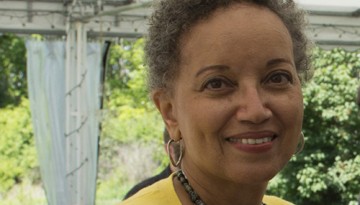
Jacqueline Davis-Manigaulte '72 won the 2017 National Urban Extension Leadership Award for excellence in urban extension programming and leadership for her Cornell University Cooperative Extension-New York City work.