William S. Nye ’77 – known to millions as Bill Nye the Science Guy – will speak at Senior Convocation Saturday, May 25, at 12:30 p.m. at Schoellkopf Field during Cornell’s 2019 Graduation Weekend.
Events include a screening of “On the Basis of Sex” by Cornell Cinema, a free estate planning clinic, an exhibition of work by a student artist at the Seneca Place office building downtown, a panel discussion as part of the Cornell University Press sesquicentennial celebration, and a “Chats in the Stacks” book talk with English professor Daniel Schwarz.
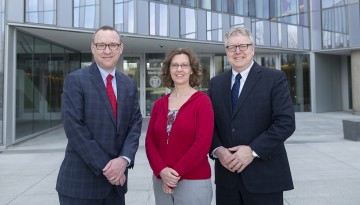
Bethany Cummings, assistant professor of biomedical sciences at the College of Veterinary Medicine, and Dr. Lisa Roth, assistant professor of pediatrics at Weill Cornell Medicine in New York City, have each won a 2018 Hartwell Individual Biomedical Research Award.
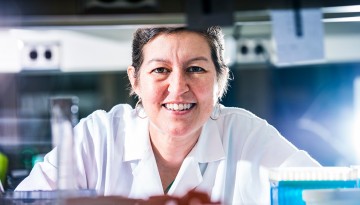
Dr. Kristy Richards ’90, a groundbreaking cancer researcher and associate professor of biomedical sciences, died on March 30 in New York City. She was 50.
The Cornell Center for Health Equity will hold its second annual symposium April 11-12 at Cornell’s College of Veterinary Medicine on the Ithaca campus.
Events include two Carl Becker Lecture Series talks by historian and author Michael Kazin; a lecture by wildlife conservationist and A.D. White Professor-At-Large Laurie Marker; Cornell Cinema’s screening of “Dragnet Girl,” accompanied live by the electronic group Coupler; and Swiss artist Elisabeth Masé in a conversation at the Johnson Museum.
The College of Veterinary Medicine has launched the Center for Veterinary Business and Entrepreneurship, a new interdisciplinary program intended to spur research, training and outreach.
Events include a World Cinema film at Cornell Cinema, the final weekend of an exhibit at the College of Human Ecology, the Cornell baseball team’s home-opener on April 2, and the College of Veterinary Medicine’s annual open house.
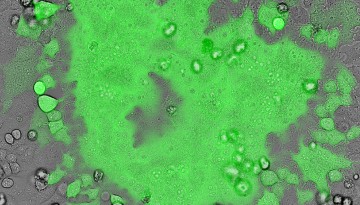
A research team led by David Russell from the College of Veterinary Medicine has pinpointed a novel angle of attack that could eradicate HIV reservoir cells – while leaving healthy cells untouched.