Cornell faculty are invited to submit proposals for fully funded Thought Summits to spark interdisciplinary collaborations in data science and AI, with applications due June 16.
On May 17, 21 student teams will present their video games at the annual Game Design Initiative at Cornell 2025 Games Showcase in Clark Atrium in the Physical Sciences building from 1-4 p.m.
Cornell researchers have found the developers of large language models and the educators who use them have different ideas about the potential harms they may cause, a finding that researchers say underscores the need for educators to be more involved in the tools’ development.
Nominations are solicited annually from all members of the academic community, the awards bestowed in recognition of the importance of undergraduate advising.
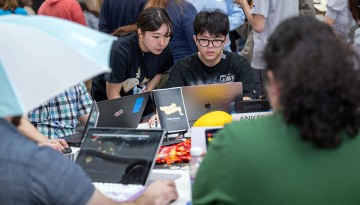
In between classes and extracurriculars, students showcasing their tech-based projects in the 2025 annual Bits On Our Minds could have been seeing friends or catching up on sleep. Instead they were using their free time to brainstorm, experiment, code and create.
A new study by researchers at Cornell Tech and the University of Pennsylvania shows freelance writers who are suspected of using AI have worse evaluations and hiring outcomes.