Jehron Petty ‘20 is on a mission to increase the number of Black, Latinx, and Native American college students in computing. He's the next guest on the Startup Cornell podcast.
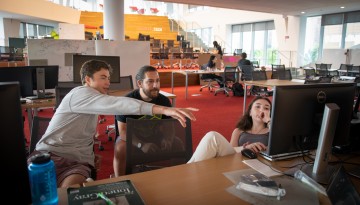
Sophomore students in the Milstein Program in Technology and Humanity spent their first summer in person at Cornell Tech, taking part in a series of mentored workshops, guest seminars, group projects, innovation challenges and other activities.
Rafael Pass, professor of computer science at Cornell Tech and at the Cornell Bowers College of Computing and Information Science, and a collaborator offer a potential pathway to solving an age-old computer science and cryptography problem.
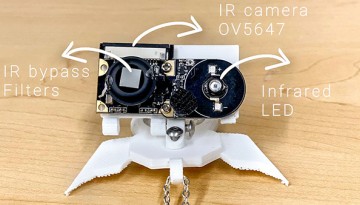
Tracking facial movements, and possibly their cause, is one of the proposed applications for NeckFace, a necklace-type wearable sensing technology developed in the lab of Cheng Zhang, assistant professor of information science.
New, award-winning research from the Cornell Ann S. Bowers College of Computing and Information Science is helping inform and improve future design and development of interactive machine learning tools.
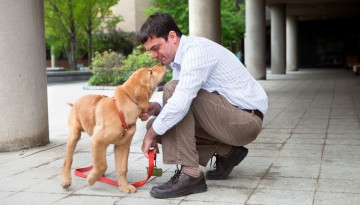
Embark Veterinary, Inc. – a canine genetics startup company that graduated from Cornell’s McGovern Center incubator in late 2017 – announced $75 million in venture funding on July 26.
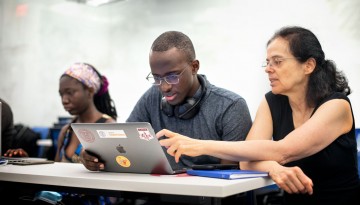
Diversity is a major priority of the Cornell Ann S. Bowers College of Computing and Information Science, and three summer offerings – CSMore, SoNIC and the Designing Technology for Social Impact Workshop – demonstrate that commitment.