Foreign-born Ph.D. graduates with science and engineering degrees from American universities apply to and receive offers for technology startup jobs at the same rate as U.S. citizens, but are only half as likely to actually work at fledgling companies, a Cornell study has found.
Tweets believed to be written by African Americans are much more likely to be tagged as hate speech than tweets associated with whites, according to a Cornell study analyzing five collections of Twitter data marked for abusive language.
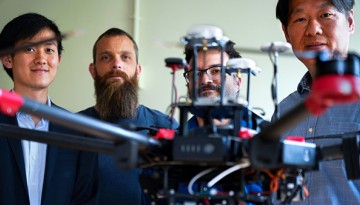
An artificial intelligence system developed by a Cornell-led team has identified a promising material for creating more efficient fuel cells – a potential breakthrough in both materials science and machine learning.
Cornell researchers have released a free, open-source software to help make potentially subjective and time-consuming plant breeding decisions more consistent and efficient.
The new Shen Fund for Social Impact will enable students to pursue engineering projects that could benefit society by using technology in innovative ways.
A predictive model combining information about plant physiology, real-time soil conditions and weather forecasts can save 40% of the water consumed by traditional irrigation strategies, according to new Cornell research.
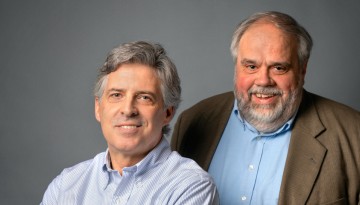
Professors Michael Heise and Marty Wells discuss how they collaborate on empirical legal research, applying advanced data science and statistical analyses to look at legal issues that affect people’s lives as well as examining the judiciary system and how it operates.
Now in its ninth year, Cornell’s SoNIC summer workshop has exposed hundreds of minority students from across the country to the frontiers of computer science, as well as the prerequisites and rewards of advanced degrees.
Mathematical and computational models can make power grids, financial institutions and other networks less vulnerable to collapse, Jon Kleinberg, the Tisch University Professor of Computer Science, said at a June 13 presentation on Capitol Hill.