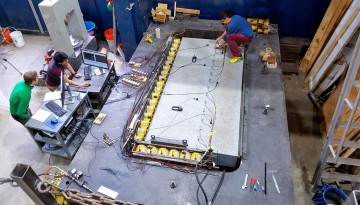
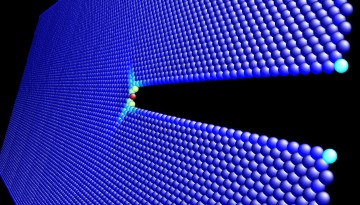
By examining earthquakes in a fresh way, a modeling revelation discovered in the lab by Cornell engineers helps science inch closer to accurate quake forecasts.
Eleven assistant or associate professors representing four colleges have recently received National Science Foundation Faculty Early Career Development Awards to support their research objectives.
Ukrainian students and researchers share thoughts about their loved ones’ safety and their country’s future as they absorb the ongoing news of Russia’s invasion of Ukraine.
In a global cautionary tale, the UN’s IPCC has a new climate change report written by Cornell’s Rachel Bezner Kerr and 270 others, to pull our planet from dire environmental ruin.
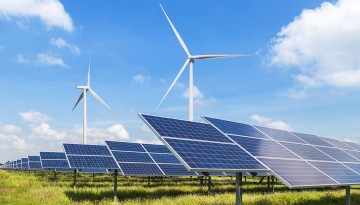
Cornell engineers have developed a new tool by combining machine learning and optimization modeling to provide hour-by-hour analysis of New York’s energy needs.
For the past year, Cornell doctoral students Megan Barrington and Christian Tate have been living, thinking and working on the red planet Mars, digitally commuting from our own blue world.
Cornell researchers and a startup have received more than $7 million in federal grants to advance novel clean energy research that includes wirelessly charging electric vehicles, low-carbon jet fuel and construction materials made from waste.
Researchers made a breakthrough in understanding how some materials break. Their discovery could help engineers better anticipate a material’s behavior and design novel alloys that resist fatigue.