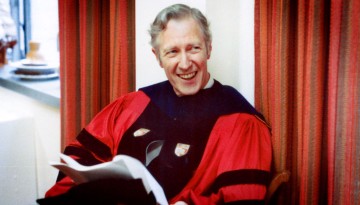
More than two years after the death of Frank H.T. Rhodes – Cornell’s ninth president, beloved for his leadership and eloquence – his family and friends gathered March 26 to celebrate his life.
By the end of this century, Cornell’s Flavio Lehner and others said that megadroughts – extended drought events that can last two decades – will be more severe and longer in the western U.S. than they are today.
The Cornell Atkinson Center for Sustainability and Environmental Defense Fund collaborate on four Innovation for Impact Fund (IIF) awards to foster creative collisions that provoke large-scale, long-term change.
The Active Learning Initiative has announced its Phase IV grants. The winning proposals, from Classics, Government, History, the Sibley School of Mechanical and Aerospace Engineering, and the Meinig School of Biomedical Engineering, included collaborations that extend across Cornell.
Artificial Intelligence, Design + Technology and Quantum Science and Technology will become part of “Radical Collaboration Drives Discovery,” bringing to 10 the number of initiatives in the provost office’s five-year-old program.
A select group of student entrepreneurs are chosen from W.E. Cornell's fall cohort to participate in its spring cohort where they conduct customer discovery and hone their business models.
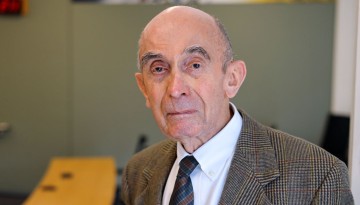
Engineering professor Emeritus Wilfried Brutsaert received the prestigious prize from Swedish academy for his groundbreaking work in quantifying environmental evaporation.
Scrapped twice by the pandemic, Dragon Day is set to return April 1 with architecture students collaborating to parade through campus a two-headed “scrap dragon” built from recycled materials.