Six faculty members are recipients of 2018 Louis H. Zalaznick Teaching Assistantships, receiving funds to develop or expand courses, and add teaching assistants.
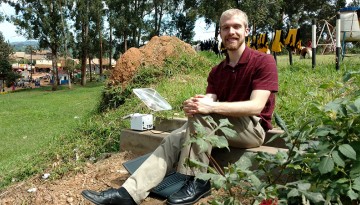
A new exchange program will present biomedical students from Cornell and Arusha Technical College in Tanzania with opportunities from opposite sides of the globe.
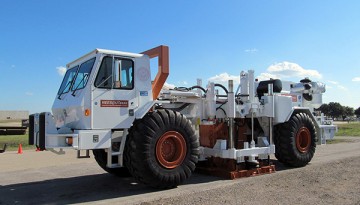
Cornell will conduct a survey of the sub-terrain on campus and in the towns of Ithaca and Dryden Sept. 21-25, the next step in its plan to implement Earth Source Heat.
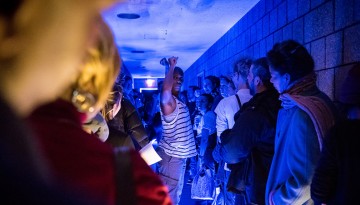
The 2018 Cornell Council on the Arts Biennial kicks off Sept. 14-15 at the Schwartz Center with “A Meditation on Tongues” by guest artist Ni'Ja Whitson.
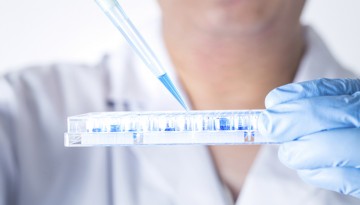
For couples hoping for a baby via in vitro fertilization, chances have improved. A process that once took hours now takes minutes: Cornell scientists developed a device that quickly corrals strong, viable sperm.
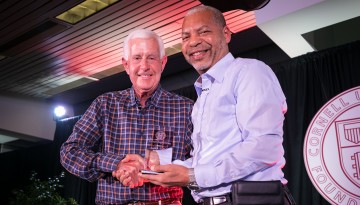
Cornell’s College of Engineering presented David A. Duffield ’62, MBA ’64, with the inaugural Cornell Engineering Distinguished Alumni Award – its highest alumni honor.