Political scientist Steven Levitsky, the Sundance Institute’s Keri Putnam and biomedical engineer Stephen Quake have joined the ranks of leading scholars and public intellectuals at Cornell as Andrew Dickson White Professors-at-Large.
A collaboration involving researchers from physics and engineering used a new cryogenic microscopy technique to study the solid-liquid interface in lithium-metal batteries.
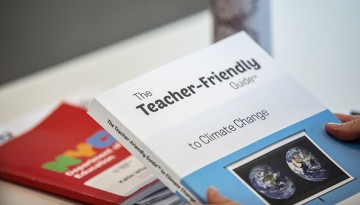
The Paleontological Research Institution and the university’s Sea Grant program raising funds to bring climate change science to every U.S. high school.
Machine learning models, which use data to help computers learn for themselves, are vulnerable to privacy leaks and malicious attacks, Cornell Tech researchers have found.
Twelve high school students from as far away as Romania and Honduras took part in the Life Changing Summer program this year, supported by Entrepreneurship at Cornell and run by Life Changing Labs.
A research group led by Andrej Singer, assistant professor of materials science and engineering, has won a grant from the Department of Energy for research aimed at creating new quantum states of matter.
New research from Cornell's Collective Embodied Intelligence Lab examines how popcorn’s unique qualities can power inexpensive robotic devices that grip, expand or change rigidity.