Students can attend hackathons on AI, health, animals and digital ag

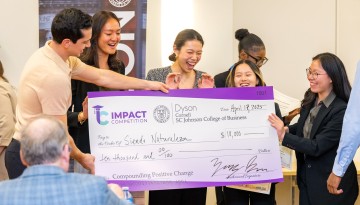
Students can apply to take part in one of four hackathons this semester — two on campus and two in New York City.

Around Cornell

Economist: Dairy industry could take a hit from tariffs

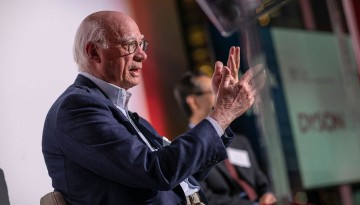
The dairy industry could lose billions of dollars if President Trump imposes tariffs on products from China, Canada and Mexico, and begins deporting undocumented immigrants, a dairy economist said at a conference at Cornell last week.

Beer sold in grocery stores drives higher sales in other categories

Beer-purchasing households visit grocery stores more frequently and increase their total monthly grocery expenditures.

New book explores the act of defiance

Sunita Sah, professor in the Johnson School of Management, has written “Defy: The Power of No in a World That Demands Yes,” a book that reveals why people need to develop more agency in their lives and change the world they live in.

December graduates charted their own course

The December Recognition Ceremony, held Dec. 22 in Barton Hall, celebrated 500 August and December graduates.

Aquatic vegetation removal has agricultural, economic, health benefits

Turning aquatic vegetation near agricultural land into compost simultaneously eradicates habitat for disease-carrying snails while improving agricultural output and increasing incomes in northern Senegal, Cornell researchers have found.

Adirondack lakes’ warming is top Chronicle story of 2024

The warming of lakes in the Adirondacks, the death of long-time benefactor and alumnus Ratan Tata ’59, B.Arch. ’62, and the retirement of Martha E. Pollack as president were among the most-viewed Chronicle stories of 2024.

$11.5M gift strengthens hospitality research, teaching

An $11.5 million gift from entrepreneur C. Kenneth Grailer ’53 will support the Nolan School of Hotel Administration by expanding the Center for Hospitality Research, helping renovate the Grailer Food Labs and providing scholarships.

Good products can be hurt by experts’ tough ratings

Experts’ more stringent online reviews have the effect of compressing aggregate ratings by penalizing higher-quality products compared to their lower-quality alternatives. To address this problem, a research team developed a method for de-biasing ratings.