International students unable to return to New York this fall have the option to live and learn on-site at more than a dozen academic partner institutions worldwide while taking Cornell classes remotely.
A team of Cornell researchers used AI to investigate what sets originals apart from their reflections, and their algorithms learned to pick up unexpected clues.
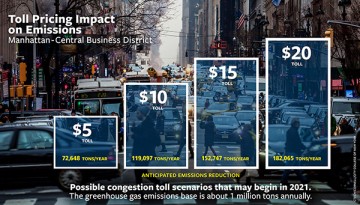
Cornell and the City College of New York research shows that by creating steep tolls for cars to enter Manhattan, traffic congestion and greenhouse gas emissions could be reduced.
President Martha E. Pollack announced the June 22 release of reports by the Teaching Reactivation Options Committee and the Preparation for Online Teaching Committee.
To help individuals take greater control of their personal information, Cornell researchers developed a platform allowing users to set restrictions on what kind of data they’ll release, and to whom.
Cornell Tech has announced a $1 million grant from The Atlantic Philanthropies to jumpstart its Public Interest Tech initiative. Aimed at developing the tools, systems, datasets, research and education needed to address significant public sector concerns.
Sophomores in the Milstein Program in Technology and Humanity were supposed to spend the summer of 2020 at Cornell Tech, but due to the pandemic, that program has moved online.