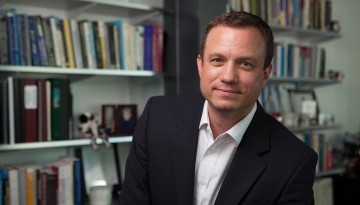
Ari Juels, a professor of computer science at the Jacobs Technion-Cornell Institute at Cornell Tech, has been named the Weill Family Foundation and Joan and Sanford I. Weill Professor – the first endowed professorship at the institute.
A Cornell researcher is working with Facebook to find ways to identify content with malicious intent and forged IDs, to help the social media giant rapidly find and remove harmful posts.
Greg Morrisett, dean of Cornell’s Faculty of Computing and Information Science, has been named the Jack and Rilla Neafsey Dean and Vice Provost of Cornell Tech, Provost Michael Kotlikoff announced June 7.
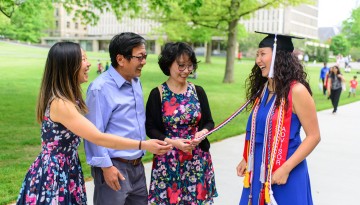
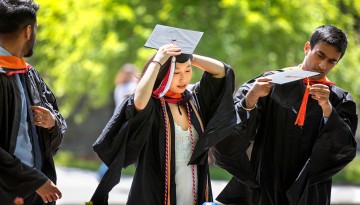
As students began to line up for Cornell’s 2019 Commencement May 26, the morning skies that threatened rain gave way to rays of sunshine wriggling between the clouds. Smiles, pomp and circumstance followed.
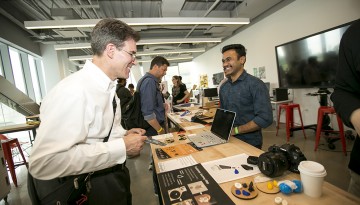
An intelligent assistant to manage gut disorders and an app that facilitates personal growth through continuous feedback from co-workers were among the winners of the fifth annual Startup Awards competition, held May 17 at Cornell Tech.
Cornell President Martha E. Pollack’s Commencement address and the Senior Convocation address by science educator Bill Nye ’77 will highlight Cornell’s 151st Graduation Weekend, May 24-26.
Students in the Milstein Program in Technology and Humanity developed a website, created a computer language learning curriculum and engaged in other service projects this spring.
Mitchell Baker, chairwoman of Mozilla and co-founder of the Mozilla Project, was on campus May 1 to speak with students in the Milstein Program in Technology and Humanity.
Cornell Law School professor Charles Whitehead has launched a venture to help boost tech startups in Ukraine, focusing initially on Kyiv and Kharkiv, the two largest cities in the country.