Cornell is a global leader in sustainability and climate change research, teaching and engagement. Our campuses are living laboratories for developing, testing and implementing solutions that address these most challenging issues.

Climate change in Vietnam spurs students to speak up

Ten students from across Cornell spent two weeks of their winter break on a journey through Vietnam, listening to farmers and community members and seeing the effects of climate change firsthand.

Cornell helps Fijians use eyes in the sky for climate studies

To help Fijian scientists track oceanic climate change for their islands in the sun, Cornell's Bruce Monger unveils eyes in the sky: satellite remote sensing.

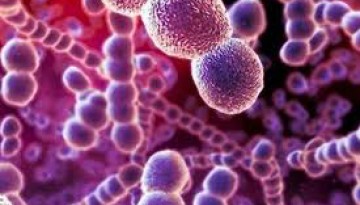
Salmonella food poisoning could damage your DNA

Salmonella food poisoning wallops you for several days, but new research by Cornell food scientists indicates that some of its serotypes – variations of the bacterial species – can have permanent repercussions. It may damage your DNA.

Kotlikoff Q&A: Next steps toward campus carbon neutrality

Last fall the Cornell Senior Leaders Climate Action Group submitted its report exploring heating and energy options for the Ithaca campus to achieve carbon neutrality by 2035. Here, Provost Kotlikoff discusses the university's next steps.

Underwater seagrass meadows dial back polluted seawater

Seagrass meadows can reduce bacterial exposure for corals, other sea creatures and humans, according to new research in Science Feb. 16.

Maize study finds genes that help crops adapt to change

A new study analyzed close to 4,500 maize varieties bred and grown by farmers from 35 countries in the Americas to identify more than 1,000 genes driving large-scale adaptation to the environment.

Alum lauds Israel's water management in campus talk

Seth M. Siegel, author of "Let There Be Water: Israel's Solution for a Water-Starved World," discussed spreading awareness of the global water problem before it becomes a humanitarian crisis Feb. 6.

Renewable fuels alone can't stop climate change

Karen Pinkus, professor of Romance studies and comparative literature, has written "Fuel: A Speculative Dictionary," to scramble our thinking about fuel as distinct from energy.

Momentum from 2016 economy will benefit first half of 2017

The positive economic momentum from 2016 will benefit the U.S. economy in the first half of 2017, but the country will likely feel the effects of policy changes from President Trump and Congress.