Cornell is a global leader in sustainability and climate change research, teaching and engagement. Our campuses are living laboratories for developing, testing and implementing solutions that address these most challenging issues.

New environment and sustainability major approved

The new major in the College of Arts and Sciences and the College of Agriculture and Life Sciences was approved March 8 by the Cornell Faculty Senate and, pending state approval, will launch in fall 2018.

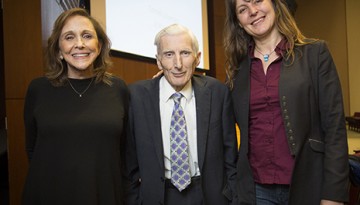
Basu: Economics of climate change will affect world poverty

Economist Kaushik Basu spoke on “Inequality, Poverty and Climate" at the Perspectives on the Climate Change Challenge seminar March 6.

New online platform plays matchmaker for the public good

Research4Impact - a cross between Match.com and LinkedIn for academics, nonprofits and those working in the governmental sector - helps connect potential collaborators that could turn academic research into real-world results.

Sustainability efforts take root at Human Ecology

For the past few years, several sustainability efforts have been launched at the College of Human Ecology, and now they are bearing energy-reducing fruit.

Housefly's love of manure could lead to sustainable feed

An interdisciplinary team of Cornell researchers is investigating a system for using housefly larvae to biodegrade manure and then harvesting the larvae for use as protein-rich animal feed.

Group blazes path to efficient, eco-friendly deep-ultraviolet LED

A Cornell-led group has demonstrated the ability to produce deep-ultraviolet emission using an LED light source, potentially solving several problems related to quantum efficiency of current devices.

Standing Rock leader decries pipelines on Sioux land

David Archambault II, chairman of Standing Rock Sioux Nation, spoke on campus Feb. 16 as part of the College of Agriculture and Life Sciences' Department of Natural Resources seminar series.

New tool gives apple farms hope in fight against spring freezes

This February's warm weather is nice in the Northeast, but apple farmers may pay a price if winter roars back. To help growers assess temperatures, Cornell has developed a new Apple Freeze Risk tool.

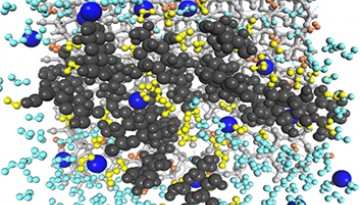
Polymer additive could revolutionize plastics recycling

A Cornell research group, led by chemistry professor Geoffrey Coates, has developed a multiblock polymer that has the potential to improve the way 78 million tons of plastics are recycled each year.