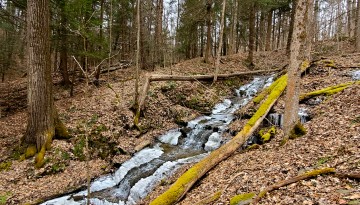
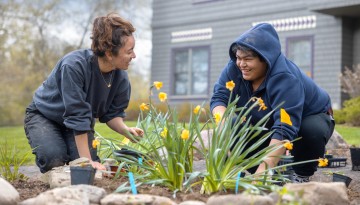
Cornell is a global leader in sustainability and climate change research, teaching and engagement. Our campuses are living laboratories for developing, testing and implementing solutions that address these most challenging issues.
Cornell to co-lead UN agency’s new agrifood initiative

Ideas that sprang from a pre-pandemic panel discussion at Cornell now inform a United Nations initiative aimed to meet looming global food needs in a healthy, equitable and sustainable way.

Migrating birds drawn by light face higher chemical exposure

Birds attracted by the glow of artificial light at night are drawn into areas where they are also exposed to higher concentrations of airborne toxic chemicals, according to a study from the Cornell Lab of Ornithology.

Students propose solar solution to Puerto Rico’s electricity woes

Brooks School students in a hands-on infrastructure class have developed a solar power policy proposal to combat Puerto Rico's persistent power outages.

Words matter in food freshness, safety messaging

Changing the wording about expiration dates on perishable food items – which is currently unregulated and widely variable – could help reduce food waste, according to a new Cornell-led study.

Keeping electricity affordable on wireless charging highways

Efficient pricing will be crucial to minimize energy costs for private operators who provide on-the-highway wireless charging for electric cars – and for consumers who will use this service.

Embracing the audacity of ambition: Future planners explore challenging climate questions facing the field

Students participating in this year's City and Regional Planning fall field trip to sites across New York City considered the many ways climate change impacts urban environments — physically, economically, socially, and environmentally — as well as disparities in resources dedicated to adaptation in different parts of the city.

Around Cornell

Cornell, DEC team up for green Hudson Valley land planning

Through a long partnership between Cornell and the DEC, communities in the Hudson watershed have received training, tools and assistance to advance conservation land-use planning and policy.

Library events highlight open access research

Library celebrates Open Access Week with talks, panels

Around Cornell

Drilling ends and data analysis begins for borehole observatory

The Cornell University Borehole Observatory provides a platform to directly study the temperature, permeability and other characteristics of the rock deep beneath the Ithaca campus – factors that will help the university determine whether to move forward with a proposed plan to warm the Ithaca campus with Earth Source Heat.